
Dr. W. Dale Dauphinee Award for Excellence in Medical Education
Recognizing one medical student and one resident who have demonstrated excellence in medical education within the schools of medicine in Canada.
The Dr. W. Dale Dauphinee Award for Excellence in Medical Education was named in recognition of Dr. Dauphinee’s many years of service as the executive director and registrar.
The award is presented annually to one medical student and one resident who have demonstrated outstanding contributions to medical education in Canada. Each recipient will be awarded $5,000 to be used to support the recipient’s education and/or professional development.
Dr. Dauphinee was amongst the innovators and leaders at the Medical Council of Canada (MCC) from 1971 to 2006. As an agent of change in both educational practices and performance assessment, he promoted and guided the modernization of national assessment practices. An innovator in academia and in regulation, he led the introduction of new technologies and assessment strategies and worked across borders and disciplines to build new alliances and venues in regulation and the evaluation of physician performance.
To honour his example, this award should confer recognition on individuals whose actions and accomplishments reflect the attitudes and values that have kept the MCC at the front of incremental change and quality improvement, enabling the organization to remain relevant to its public mandate.
For the purposes of this award, excellence in medical education is reflected in outstanding contributions that advance our understanding of assessment, curriculum, teaching and learning, educational practice, and/or other dimensions of medical education, with demonstrated meaningful impact.
Each medical school may nominate one medical student and one resident, for a maximum of two nominations per school. The letter of nomination may be submitted by the dean, associate/vice-deans of undergraduate or postgraduate medical education, program director, or faculty member. Schools are encouraged to coordinate their nominations internally before submission.
Nominees should demonstrate excellence in medical education through evidence that they have:
Each letter of nomination should:
The nomination package must include the following:
Adjudication will be based on the information provided in the nomination package.
The nomination package must be submitted electronically to [email protected] no later than April 30 of the current year.
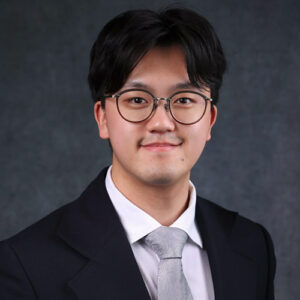
Justin Phung is a third-year medical student at the University of Ottawa. Before entering medical school, he earned a bachelor of health sciences from McMaster University.
Mr. Phung’s work focuses on making health care education and training more accessible, higher quality, and more evidence-based. In 2026, he received the Canadian Association for Medical Education Rising Star Certificate of Excellence. He has received several research grants, including the Medical Student Education Research Grant from the Ontario Medical Students Association. He was also selected to participate in the Medical Student Summer Research Training Program at the University of Ottawa.
Mr. Phung is a prolific researcher in medical education and digital health innovation. He has authored peer-reviewed works, including a paper in the Journal of Graduate Medical Education, and a forthcoming systematic review in Medical Education, investigating perceptions of competency-based medical education and entrustable professional activities. His research explores the intersection of AI and clinical training.
Additionally, Mr. Phung is a dedicated student leader and advocate. As the Ontario regional director for the Canadian Federation of Medical Students, he chaired national roundtables focused on creating accessible educational opportunities. He also served as a student advisory committee member for the newly established medical school at Toronto Metropolitan University.
Through these and future initiatives, Mr. Phung hopes to continue exploring modern technologies and their applications and efficacy within medical education.
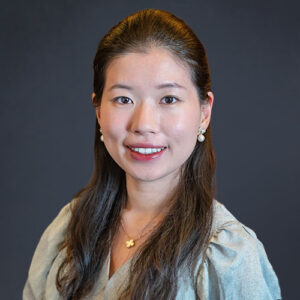
Kay Wu is a diagnostic radiology resident physician at the University of Toronto.
Ms. Wu completed her master of science in biomedical informatics at Harvard Medical School as a Frank Knox Memorial Fellow, where her work focused on developing large-scale deep learning systems for spine MRI classification, advancing AI-assisted radiology reporting, and building global imaging datasets to support more equitable AI model development.
Ms. Wu is particularly interested in how physicians understand, trust, and collaborate with intelligent systems, with an emphasis on integrating AI into health care safely and responsibly through evidence-based medical education, curriculum innovation, and rigorous evaluation of emerging technologies. She has led educational initiatives in AI literacy, mentorship, and trainee development within one of Canada’s largest radiology residency programs.
Beyond medicine, Ms. Wu is an artist and writer whose creative work has been featured in the Canadian Medical Association Journal and Canadian Family Physician. Across her medical, academic, and creative pursuits, she is driven by a commitment to bridging technology, education, and humanistic patient care.